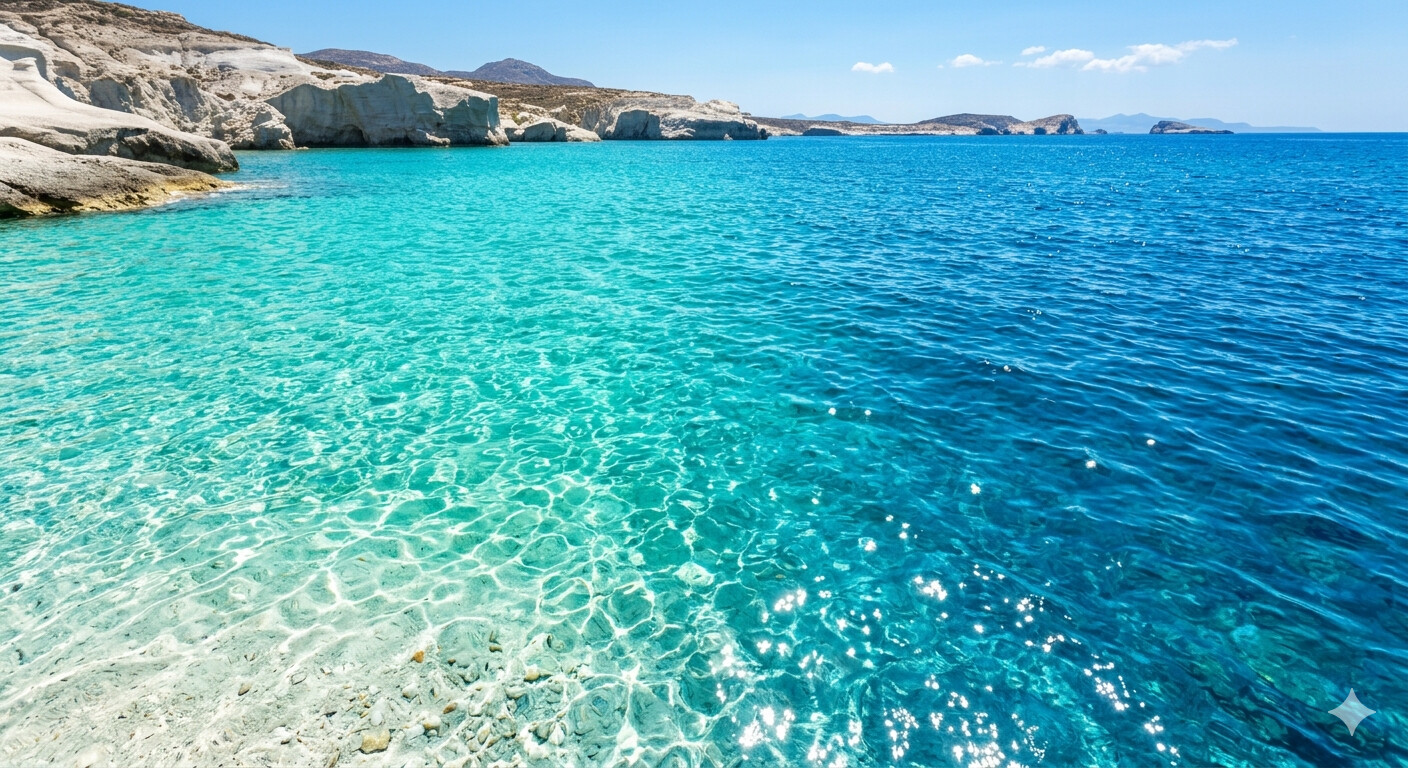
Volcanic landscape, 70+ beaches, hidden sea caves, tavernas with freshly caught seafood. Everything you need to experience Milos the right way.
Quick Facts
What you won't find
anywhere else in the Aegean
Milos belongs to the Aegean Volcanic Arc and its landscape has been shaped by millions of years of volcanic activity. This explains the white rock formations of Sarakiniko, the warm waters at Paleochori, and the volcanic rock found in every corner of the island.
Since the Neolithic period, Milos was an important trading hub due to its obsidian — a volcanic rock used for tools and weapons across the entire Mediterranean. Pieces of Milean obsidian have been found as far away as Egypt.
In 1820, a farmer in Milos discovered the statue that now graces the Louvre. The famous Venus de Milo was sculpted around 130 BC and had been hidden for centuries beneath the island's soil.
The bay of Milos is essentially a submerged volcanic caldera — one of the largest natural harbours in the Mediterranean. Historically it served as shelter for naval fleets from antiquity through World War II.
Find your beach
Milos beyond the beaches
The most iconic spots
Every month has
its own character
Few crowds, wildflowers in bloom, ideal for exploring. Sea still fresh.
The best balance. Warm sea, few crowds, everything open.
Lively atmosphere, but book everything well in advance.
Meltemi winds affect which beaches are suitable each day. Very crowded.
Perhaps the perfect month. Warm sea, fewer crowds, lower prices.
⚠️ Meltemi winds: The northern winds directly affect which beaches are good each day — southern beaches (Paleochori, Fyriplaka) are sheltered, while northern ones can have waves.